International Research Puts
Microplastics Under The Microscope
— And An Unexpected Discovery Is Turning Heads Among Americans Worried About
Memory After 60
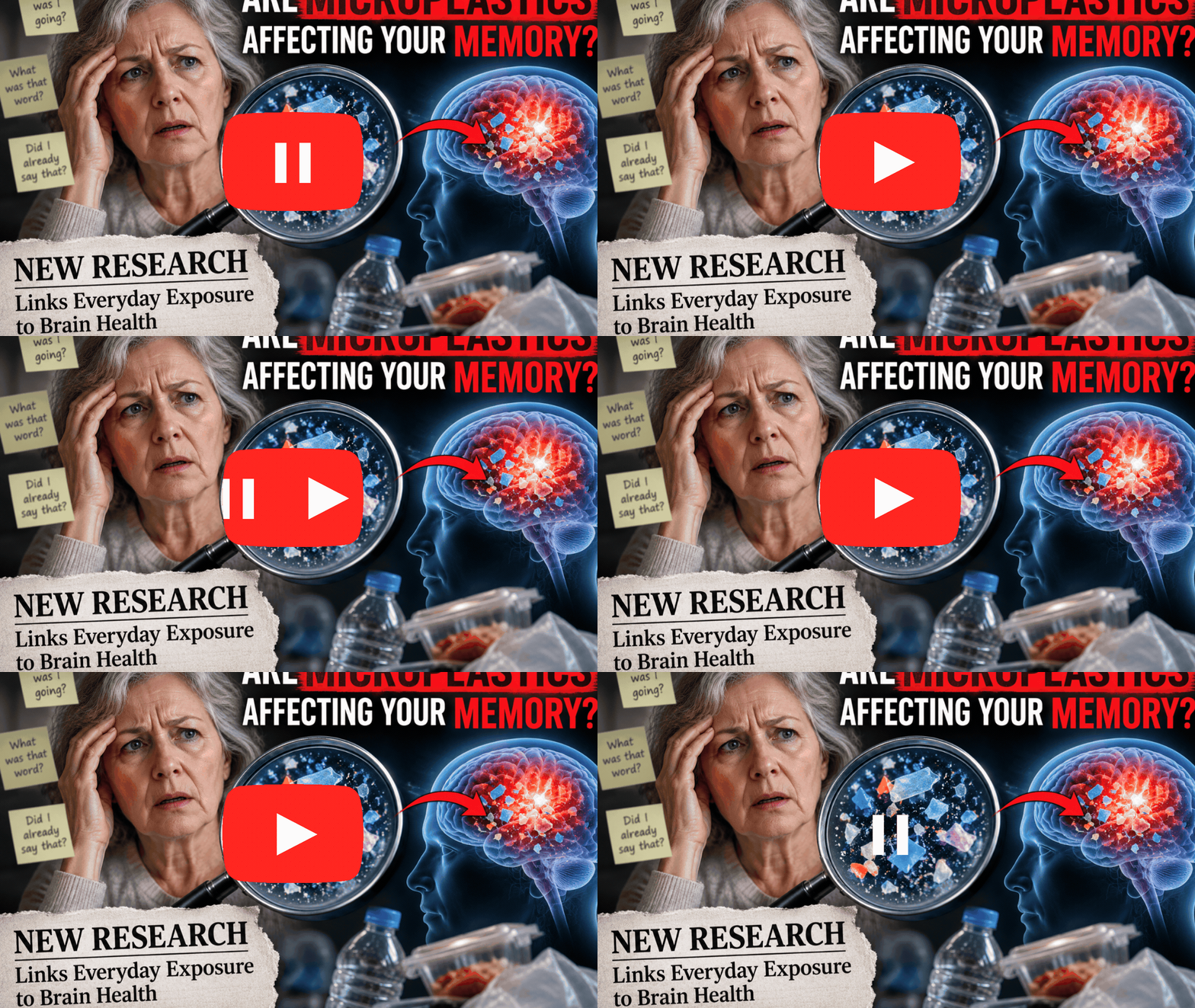
You walk into a room… and suddenly forget why you’re there.
The name of someone you’ve known for years just disappears. Or you’re halfway through a conversation when that word you’ve used a thousand times suddenly feels completely out of reach.
Maybe you’ve already tried fish oil, ginkgo, vitamins, brain-training apps, or even talked to doctors — yet you’re still dealing with that same frustrating mental “fog.”
At first, it’s easy to brush it off as stress or just another part of getting older.
But when those little moments start happening more often, one uncomfortable question can be hard to ignore:
“What if this keeps getting worse?”
For many people, the biggest fear isn’t forgetting where they left their keys.
It’s losing the confidence to drive, work, keep up with conversations, or continue living independently.
And maybe worst of all… feeling like you’re no longer fully present for the moments that matter with your children, grandchildren, and the people you love most.
But what if getting older isn’t the whole story?
That’s the question that sent a former federal prosecutor — a man whose 40-year career depended on an exceptional memory — searching for answers after his own ability to remember began slipping.
After doctors, medications, supplements, and more than $14,000 spent looking for answers, he began to suspect everyone had been looking in the wrong place.
Instead of asking how to deal with the symptoms, he started asking a very different question:
What could be contributing to this in the first place?
That’s when his investigation took an unexpected turn.
While digging through international research — including work connected to researchers in Japan, Europe, and the United States — he came across a hypothesis that completely changed the direction of his search:
Could microscopic particles we’re exposed to every day be involved in inflammatory processes inside the brain?
We’re talking about particles associated with things most of us encounter without giving them a second thought…
The water we drink. The food we eat. Even the environment around us.
But that wasn’t the only piece of the puzzle.
His investigation also pointed toward another possible factor involving the way certain brain cells use energy.
That combination eventually led to what was described as a “dual-action” approach — one designed to look beyond everyday forgetfulness and instead focus on the two mechanisms described in the investigation.
And that’s where things started getting really interesting.
Then the first reported results began coming in.
According to the data presented in the video, an initial group of 500 volunteers took part in the evaluation.
After 60 days, 89% reportedly experienced improvements in areas related to focus, recall speed, and mental clarity.
Today, the presentation states that more than 47,000 people have already tried the approach.
One of the most memorable accounts came from someone who described what life had felt like before:
“It was like living behind a dirty window.”
After following the protocol for several weeks, that same person described the change in much simpler words:
“I feel like myself again.”
And maybe that’s why this investigation has sparked so much curiosity.
Because it doesn’t start by asking how to simply “remember things better.”
It starts with a much bigger question:
Why might this be happening in the first place?
The full video reveals how this investigation began, what was uncovered, and why this so-called “dual-action” mechanism became the centerpiece of the approach.
If you or someone you care about has noticed more frequent forgetfulness, trouble finding the right words, or that stubborn feeling of mental fog, the presentation lays out the full story so you can review the claims and evidence for yourself.
Click below to watch the presentation while it’s still available on this page.